Neo brutalist architecture carries brutalism’s raw concrete, geometric form and function-first logic into newer work; the main condition is that the same name now also labels a web design trend, so check which one a source means.
The style belongs to a longer line of city building traditions, which architectural styles in cities explained sets out side by side.
How the name and the look developed
Brutalism did not take its name from harshness. HubSpot’s explainer notes that the “brutal” in brutalism is often misunderstood as meaning harsh or violent, when the style is better described as raw, dry and unrefined. That meaning drives everything that follows: a brutalist building shows what it is made of and how it stands. The look developed in four stages.
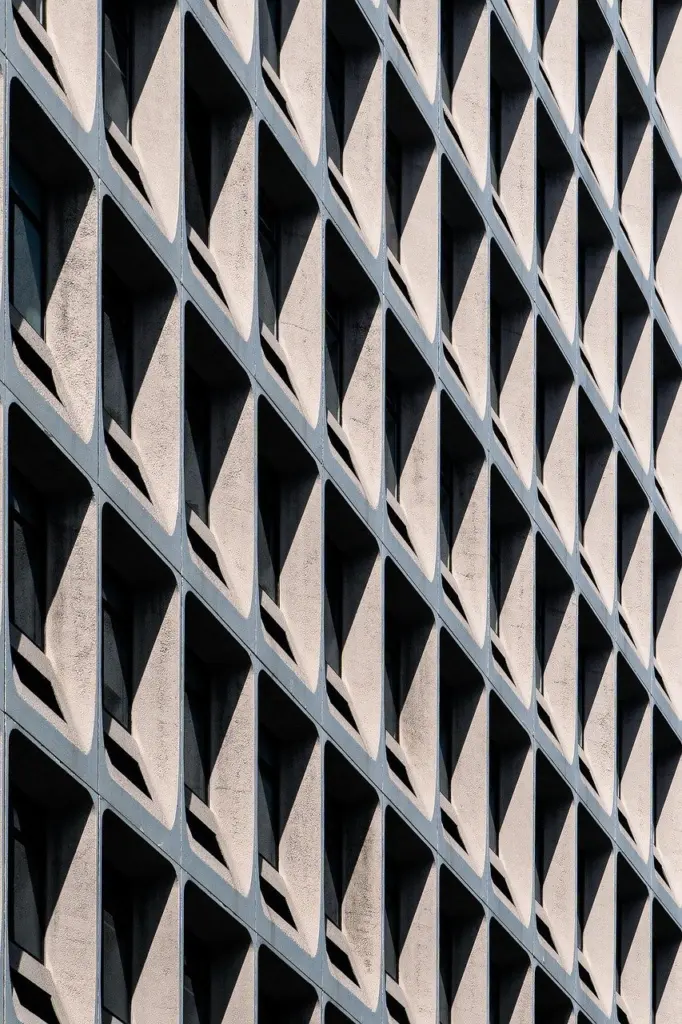
- Raw material first. Brutalism uses materials honestly and directly, in efficient geometric forms. The material at the centre of that idea is concrete. Marcel Breuer, who practiced at Harvard, did a considerable amount of work in beton brut, the French term for raw concrete.
- Public buildings as the main stage. The style is common in post-World War Two architecture, particularly transportation buildings and civic complexes. That is why the clearest examples are public ones, such as city halls, libraries and campus buildings.
- Concrete as a civic symbol. At Boston City Hall the concrete armature became emblematic of the building’s straightforward honesty and its civic monumentality. The original design was intended to express a new and more transparent form of municipal government.
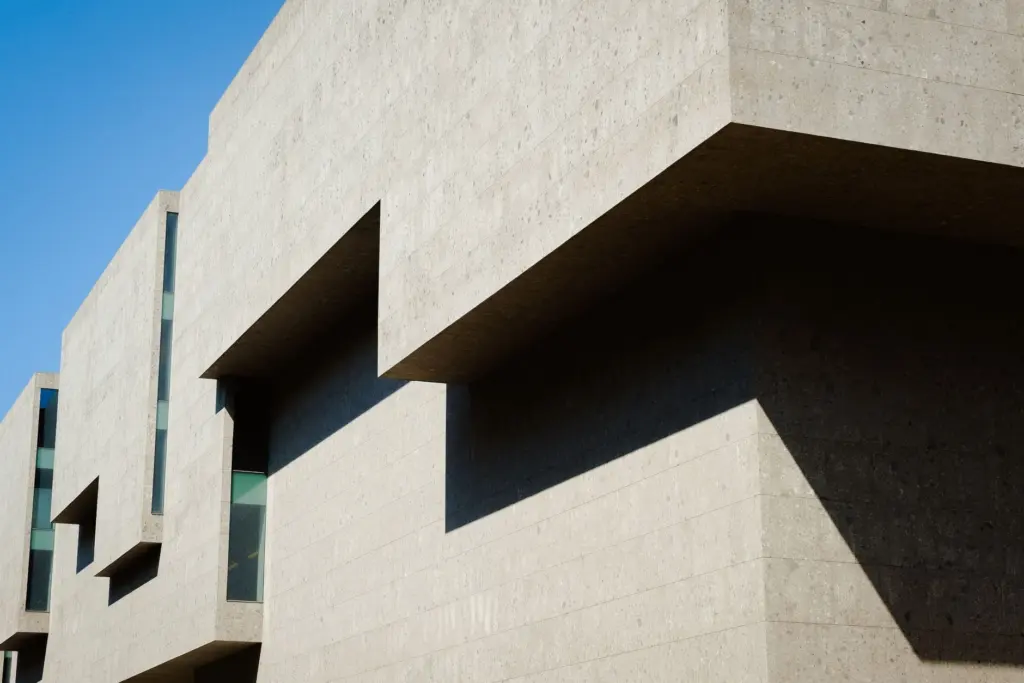
- A later label. The “neo” prefix applies the same logic to newer work. HubSpot says the neo brutalist architectural movement prioritises geometric shapes and function, and that is the trait the web design trend borrows.
The practical consequence is that neo-brutalism is defined less by a single material recipe than by a stance: show the structure, keep the form geometric, and let function set the shape. The next section looks at the material that carries that stance.
Materials that define the style
Concrete is the defining material of the family. Boston City Hall shows the principle at full strength, because its intricate structure features concrete inside and out. The concrete is not a hidden frame behind another finish. It is the structure, the surface and the expression of the building at once.
The same building shows how seriously that material is treated when the building is updated. Its renovation preserved the punctured grid concrete ceiling and the large concrete pillars inside, which are exactly the elements a visitor would remember. If you are judging whether a new building belongs to this tradition, ask whether the concrete does visible structural work and whether the finish is left honest, rather than whether it simply uses concrete somewhere.
Brutalism versus neo-brutalism
The term neo-brutalism is used in two fields, and the difference matters when you read about it. In architecture it points back to the concrete civic tradition. In design writing it is also the name of a web and interface movement, and the dated comparison available for that usage is shown below.
| Aspect | Original brutalism | Neo-brutalism | Planning use |
|---|---|---|---|
| Period | 1950s–1970s | 2021–present, as the term is applied to digital product UI | Use the date to separate original buildings from newer work and from screen design. |
| Stated aim | Structural honesty and utilitarian function | Commercial differentiation, personality at scale | The older test is honesty of structure; the newer usage is driven by brand identity. |
| Medium | Architecture | A web and UI design movement | Check whether a source is discussing buildings or interfaces before using it. |
| Shared trait | Efficient geometric forms and honest use of materials | Geometric shapes and function | Geometry plus function is the thread connecting both usages. |
Dates and aims in the table come from the Neubrutalism guide, and the shared geometric and functional trait from HubSpot’s neo-brutalism explainer.
The takeaway is that the difference lies mainly in motive and period. The original movement aimed at structural honesty and utilitarian function, while the newer usage in the comparison aims at distinctiveness. The geometry and the emphasis on function are what both share. For a building, that means the formal vocabulary may look familiar while the reason for choosing it can differ.
Named buildings and architects to know
The landmarks below are original-era brutalist buildings. They are the reference points against which newer work in the same vein is usually judged, and several are easy to visit.
Boston City Hall, Boston
Boston City Hall was designed by Kallmann, McKinnell, and Knowles. A statement from Utile, reported in coverage of the building’s renovation, describes it as internationally known as an exemplar of Brutalism. The Massachusetts Historical Society’s modernism series notes that the building and Holyoke Center were built within a decade of each other. It also records that Boston and Cambridge lost a third of their inhabitants between 1950 and 1980, so these buildings rose in cities that were shrinking.
Carpenter Center, Cambridge
Harvard University’s Carpenter Center is by the Swiss-French architect Le Corbusier. It is cited alongside Boston City Hall among the US brutalist buildings, which makes Cambridge and Boston a compact place to compare a European master’s work with local designs.
Marcel Breuer and the Boston area
Marcel Breuer practiced architecture at Harvard and had a number of commissions around Boston and Massachusetts, according to a local architecture forum. A Breuer tower in Connecticut, now owned by IKEA, is also cited among US brutalist buildings. Breuer is the name to follow if you want to see how a single architect handled raw concrete across several sites.
Spotting neo-brutalist work in a city
Spotting the style comes down to a few checks, applied in order.
- Read the date first. The Neubrutalism guide places original brutalism in the 1950s–1970s. A building from those decades belongs to the original movement, while a later building showing the same traits is the candidate for the neo label.
- Treat the structure as the finish. At Boston City Hall the concrete was both frame and surface. A building that shows its structure honestly fits the tradition; one that covers it does not.
- Judge geometry and function together. Efficient geometric forms that follow how the building is used are the core of the approach. Geometry alone, without a functional reason, is closer to decoration.
- Start with public building types. The original style concentrated in civic complexes and transportation buildings, so town halls, libraries, campuses and stations are the most productive places to look.
Street-level viewing suits this style, because texture and shadow only read up close. The World’s Most Walkable Cities in 2026: 5 Urban Gems That Make Walking Easy And Enjoyable is a useful companion for planning that kind of facade-watching on foot. For skyline-scale buildings in a single city, Philadelphia Skyline Giants: The 10 Tallest Buildings in 2026 (Facts, Heights, And Where To See Them) offers a contrasting view of how a city’s major buildings are read.
Debate and preservation
Raw concrete divides opinion, and Boston City Hall is the clearest case. Its renovation followed much-divided opinion over the future of the building, and the project chose to keep the punctured grid concrete ceiling and large concrete pillars rather than soften them.
The building’s own history explains why the argument persists. The concrete was read as honesty and civic monumentality, and those qualities are exactly what different audiences weigh differently. For newer work in the same vein, the lesson is that exposed concrete carries meaning, and a design should earn that meaning through clear structure and function rather than relying on surface texture alone.
Frequently asked questions
Where can I see brutalist buildings beyond Boston?
Within the United States, San Diego’s Geisel Library is cited as a brutalist building. In the UK, which has several notable brutalist buildings, London’s National Theatre is among them.
How can I tell whether a source on neo-brutalism means architecture or web design?
Check what it describes. The Neubrutalism guide defines the term as a contemporary web and UI design movement, while architectural uses discuss buildings, structure and materials such as concrete.
Was Boston City Hall designed to look severe?
Its stated intent was different. The original design was meant to express a new and more transparent form of municipal government, and its concrete was seen as a sign of honesty rather than severity.