Ask which are the most walkable cities in the world and the answer shifts with the yardstick: a 2024 study of cities over 500,000 residents ranked Milan first and Copenhagen second, with Tokyo 50th.
Walkability is one thread in how a city’s built form works. For the wider picture, see architectural styles in cities explained. The cities profiled below are chosen to show contrasting street-level traits, not to repeat the study’s top places.
What a walkability ranking measures
A walkability ranking measures how close daily needs are, not how attractive a street is. The 2024 study ranked cities with more than 500,000 residents on two inputs: the average walk time to key amenities, and the share of residents within a 15-minute walk. Its yardstick follows the 15-minute city idea, in which key amenities sit within a 15-minute walk or bike ride, as the study summary explains.
Milan shows what a top score looks like. The average Milanese walks about 7 minutes to reach key amenities, and 98% of the population lives in a 15-minute neighborhood. Paris and Barcelona also show wide 15-minute accessibility. France supplies the most cities in the top 20, with five: Lyon, Paris, Marseille, Bordeaux and Lille.
Three assumptions often distort how these results are read. The table separates them from what the evidence supports.
| Common assumption | What the evidence shows | Planning use |
|---|---|---|
| Famous big-city names top the list | Milan ranked first and Copenhagen second. Tokyo placed 50th. No North American city made the top 50, and Vancouver ranked 53rd. | Treat rank as a measure of access to daily needs, not of fame or sightseeing appeal. |
| A walkable city is walkable everywhere | Manhattan is highly walkable, but other New York City boroughs are not. Averages do not capture variation inside a city. | Check the specific neighborhood before choosing where to stay or live. |
| Walkable means a car-free centre | Copenhagen’s Strøget runs about 3,500 feet across four connected streets, and cars may pass only at very low speed. Milan’s average is 7 minutes to key amenities. | Look for slow traffic and nearby amenities rather than a total car ban. |
Figures come from the 2024 walkability study summary and Travel Awaits’ city guide.
Why walkable cities matter
Walkable cities matter because they encourage more physical activity and foster community, according to the study summary. Both effects follow from the same design choice: when amenities are within a 15-minute walk, walking becomes a practical way to run errands rather than a leisure activity.
The same reasoning explains why averages deserve caution. A city can score well overall while some districts sit far from shops and services. Walkability measures the average distance to key amenities, and that average does not reflect the variation within a city.
Walkable layouts also connect to wider debates about low-impact urban design. Readers following that thread can continue with Masters Of Green Design: A Practical Guide To Famous Sustainable Architects In 2026.
Street-level traits of five walkable cities
Copenhagen: a pedestrian spine with slow traffic
Copenhagen ranked second in the study. Its clearest pedestrian feature is Strøget, the main shopping street, which has been a pedestrian area since the 1960s. It is about 3,500 feet across four connected streets. Cars may pass, but only at very low speed, so the street works for walkers without cutting off access entirely.
The lesson for other cities is that a pedestrian street does not have to ban vehicles outright. Slow speeds and a continuous, connected route do much of the work.
Barcelona: wide 15-minute reach and a walking grid
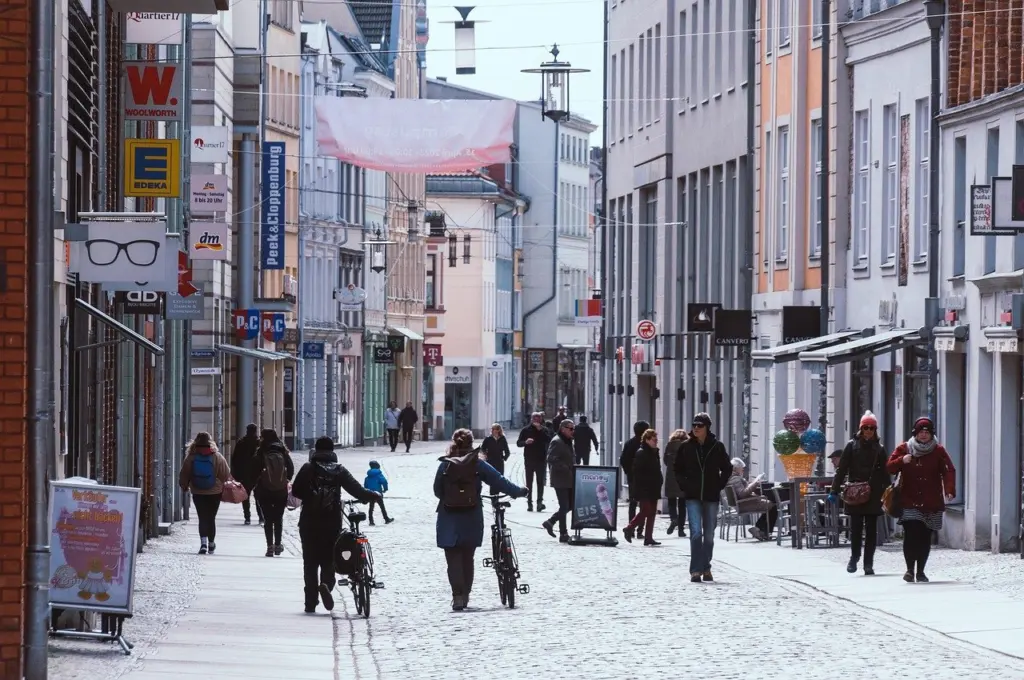
Barcelona is one of the cities the study singles out for wide 15-minute accessibility. A walking-focused city guide points to the Eixample’s grid, the quieter corners of Gràcia and the seafront at dusk as places to explore on foot. For a visitor, the practical advice is to organize a day around one or two neighborhoods rather than crossing the whole city.
Tokyo: a lower rank that still sits in the top 50
Tokyo placed 50th in the study, which still puts it inside the top 50 among cities over 500,000 residents. Kyoto, ranked 28th, is the most walkable non-European city in the same ranking. Read Tokyo’s position as a middle-of-the-pack result in a strong field, not as evidence that the city is hard to walk.
Melbourne: laneways as walking destinations
Melbourne’s walking appeal rests on its laneway culture, exceptional coffee and a neighborhood for every mood, as the same city guide describes. Here the walk is the attraction, with lanes rewarding exploration rather than just connecting points. That suits travelers who prefer wandering to a fixed route.
New York City: Manhattan is walkable, the boroughs vary
In Manhattan, the pavements from block to block are in reasonable condition and the sidewalks are wide, according to Travel Awaits. Central Park adds a 6-mile road that is completely car free. The study summary adds the caveat: Manhattan is highly walkable, but other New York City boroughs are not. No North American city is in the top 50, and Vancouver ranks 53rd. For New York, the walkable experience depends heavily on which borough you choose.
Using rankings to choose where to walk
Rankings help most as a first filter, then local detail should decide. Use these checks to turn a rank into a decision.
- Check the neighborhood, not the city. Because averages hide variation, a high-ranking city can still have districts where amenities are far apart. New York’s contrast between Manhattan and its other boroughs is the clearest example.
- Judge the street, not only the score. The study’s inputs are walk time and 15-minute coverage. Features such as slow-speed access on Strøget or wide Manhattan sidewalks show how the street itself supports walking.
- Don’t assume Europe is the only answer. Kyoto ranks 28th and is the highest non-European city in the study, so strong walking cities exist elsewhere.
- Match the city to your style. Copenhagen suits a single long pedestrian route, Barcelona suits neighborhood-by-neighborhood exploring, and Melbourne suits open-ended laneway wandering.
Building shape also affects how a street feels at ground level. For a contrasting urban style, see Neo-Brutalist Architecture: The Bold, Unapologetic Style Reshaping Cities in 2026.
Frequently asked questions
| Question | Answer |
|---|---|
| What is a 15-minute neighborhood? | It is an area where key amenities are within a 15-minute walk or bike ride, as defined in the 2024 study summary. In Milan, 98% of residents live in one. |
| Does a pedestrian street have to ban cars? | No. Copenhagen’s Strøget allows cars to pass at very low speed, according to Travel Awaits. |
| Which non-European city ranks highest? | Kyoto, Japan, ranks 28th in the study and is the most walkable non-European city in it. |
| Do any North American cities make the top 50? | None do. Vancouver, Canada, comes closest at 53rd, according to the same study. |