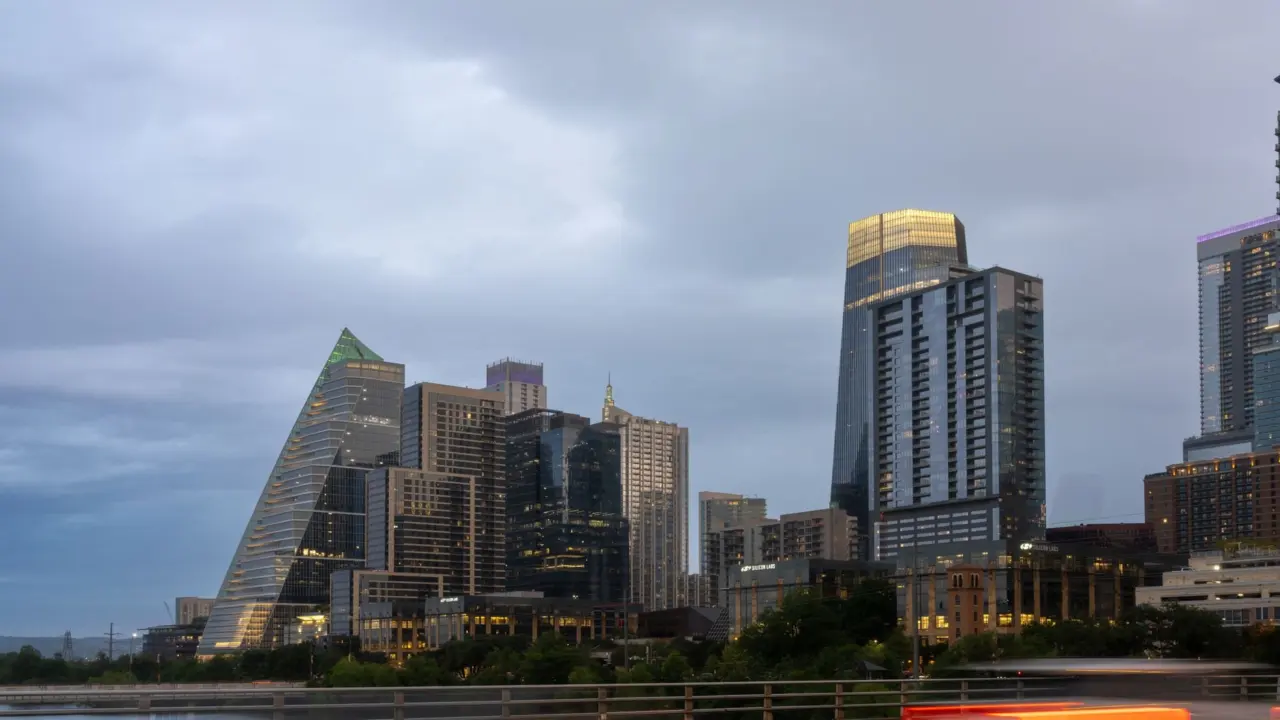
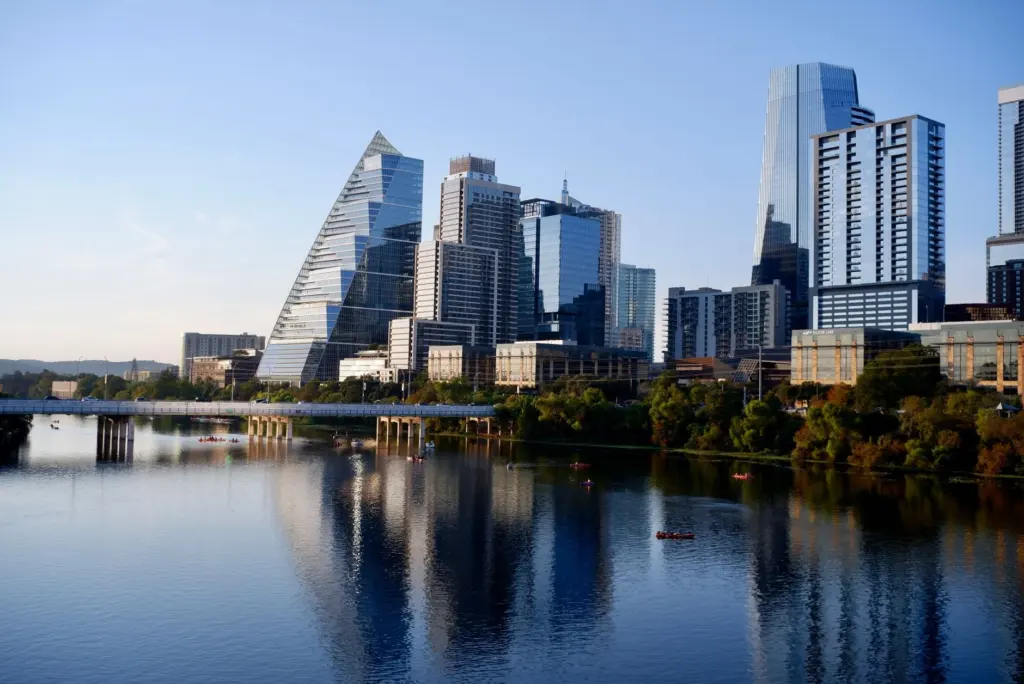
Asked for the list of tallest buildings in Austin, most people expect a tidy, completed ranking. The headline answer is Waterline: a 74-story, 1,022-foot tower designed by Kohn Pedersen Fox, projected for late 2026 completion.
That answer carries conditions, and several common assumptions about the skyline do not hold up. The sections below correct them one at a time. For the wider design context behind the shapes you see downtown, start with architectural styles in cities explained.
Waterline and the tallest-building claim
The first misunderstanding is that Austin’s tallest tower is a finished building. According to a 2023 blog post on the project, Kohn Pedersen Fox broke ground on Waterline in downtown Austin. The tower is 1,022 feet (312 metres) tall with 74 stories. The same post projects completion for late 2026, when it would become the tallest tower in Texas. A projection is not an opening date. Confirm that the tower has topped out and opened before quoting it as the current record-holder.
The second misunderstanding is that this is only a local record. An Austin real-estate blog’s April 2022 report noted that the tallest building in Texas clocked in at only 1,002 feet. That is the state benchmark Waterline’s quoted height is set against. If Waterline reaches the height quoted, it passes the Texas figure and so sits above every other Austin tower too.
| Common assumption | What the record shows | Planning use |
|---|---|---|
| The tallest tower is already standing | Waterline broke ground; completion is projected for late 2026; 74 stories | Treat the tower as projected until an opening is confirmed |
| It is only an Austin record | Waterline is quoted at 1,022 ft; the tallest Texas building was cited at 1,002 ft in 2022 | Measure Austin’s top tower against the state benchmark, not just against local towers |
| Permit approval means fast delivery | The 98 Red River Street permit approval was reported in April 2022; estimated construction time is 64 months, per trail closure notices | Expect a long build, so any skyline list dates quickly |
Figures in the table come from the Waterline project post and the report on the 98 Red River Street approval.
Use the table as a checklist rather than a ranking. It separates what is built, what is projected and what is merely permitted, a distinction many skyline lists blur. Any list that places a projected tower beside completed ones should say so in the row itself.
Reading heights and floors on a ranked list
The third misunderstanding is that a height figure is a single, universal number. Every quoted height depends on where the measurement stops. Waterline’s 1,022 feet (312 metres) in the 2023 project post is a headline figure, not a technical specification. Before comparing two towers, check which point each figure reaches:
- Architectural top. This counts permanent design features such as a spire, which can lift a tower’s rank without adding an occupied floor.
- Roof height. This stops at the roofline, which makes it the fairer tiebreaker between towers of similar architectural height.
- Tip height. This runs to the highest point, antennas and masts included, so it flatters towers carrying broadcast equipment.
- Stories. A story count measures levels, not height. Waterline’s 74 stories describe how it is stacked, and two towers with the same count can differ in feet because floor-to-floor heights vary.
The practical rule is to compare like with like. Where possible, prefer a figure from an independent tall-building body or city record over a developer’s marketing number. When a source gives both feet and metres, as the Waterline post does, keep both so later comparisons do not drift through rounding.
Height also says little about design. The Essential Guide To Architectural Styles: 12 Key Types Every Home Lover Should Know (2026) shows how towers sit within wider traditions. The explainer on postmodern architecture covers one movement known for expressive rooflines and ornament, which is a useful lens when you look at how a tower finishes at the top.
Under-construction and proposed towers
The fourth misunderstanding is that approval, construction and completion are the same event. They are separate stages, and a tower can sit at any of them for a long time. The downtown pipeline includes these named projects:
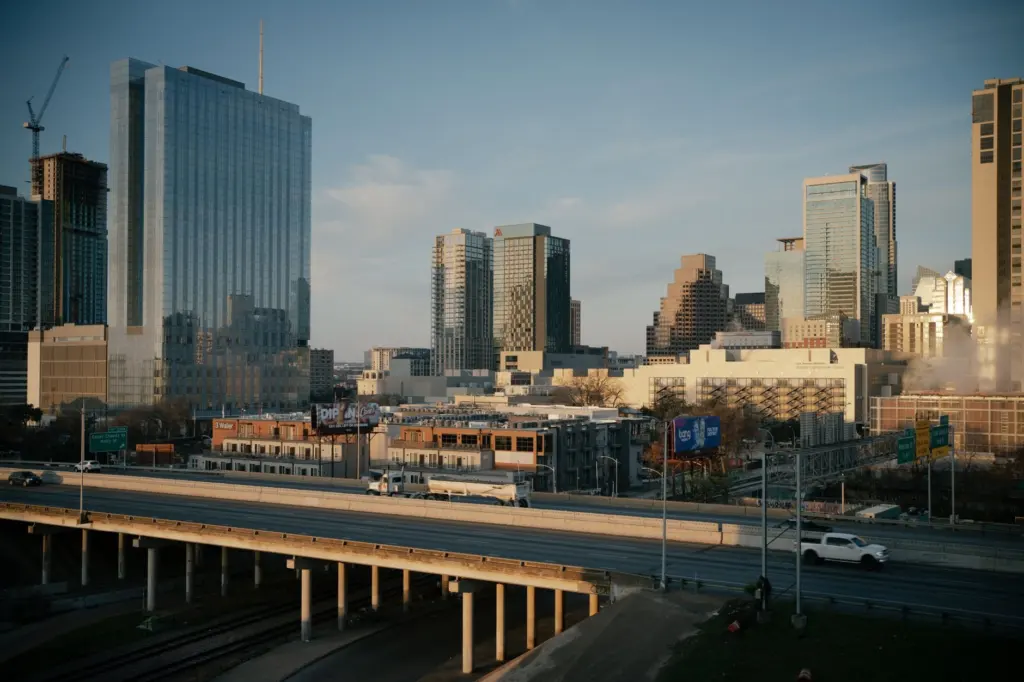
- 98 Red River Street. This mixed-use supertall is the vision of a team including developers Lincoln Property Company and Kairoi Residential, with KPF and HKS named as architects, according to the April 2022 approval report. That report says the City of Austin approved its permit and gives an estimated construction time of 64 months from trail closure notices.
- Block 185. Archinect’s roundup of downtown towers described this tower as already under construction and entirely leased by Google, as of December 2019.
- 6 x Guadelupe. The same roundup places this mixed-use tower at 400 W 6th Street and calls it only one of many new towers.
The scale of the pipeline explains why downtown changes so fast. That roundup, citing CoStar, counted a record-breaking 8.1 million square feet of office buildings under construction as of December 2019. It also reported, citing the Austin Business Journal, that Austin ranked No. 2 in the country for office construction, behind Nashville.
Those figures are a dated snapshot, not a current count. A tower described as under construction in December 2019 may have opened since, and a permitted tower may have changed its programme. Use these entries as leads to check against city permit records and developer announcements rather than as a live status board. For a reader tracking the skyline, the 98 Red River Street project is the one most likely to reshape the top of any ranking, because its permit is approved and its build time is stated.
What a tower contains matters as much as its height
The fifth misunderstanding is that the tallest tower is simply the biggest residential block. Waterline shows why that is wrong. The project post lists 352 apartments, 700,000 square feet of office space and a 251-room hotel within its 74 stories, and names Lincoln Property Company (LPC) and Kairoi Residential as the developer partners. A single tower therefore serves residents, workers and visitors at once.
For a ranked list, this means a use column is worth having next to height and stories. A residential tower, an office tower and a hotel tower of similar height affect downtown in different ways, from daytime foot traffic to evening occupancy. If you are comparing towers to decide where to live or work, compare their programmes first and their heights second. If you are comparing them as skyline landmarks, height and measurement point matter most.
Frequently asked questions
| Question | Answer |
|---|---|
| What is the tallest building in Austin? | Waterline is the tower named as set to become the tallest in Texas, at 1,022 feet with 74 stories, with completion projected for late 2026 in a 2023 post. Confirm its opening status before treating it as completed. |
| Which towers are under construction in Austin? | Named downtown projects include the Red River Street supertall, whose building permit was approved by the City of Austin, and Block 185, which was under construction and entirely leased by Google, per Archinect. |
| Who designs these supertall towers? | Kohn Pedersen Fox designed Waterline. The 98 Red River Street report names KPF and HKS as architects, with Lincoln Property Company and Kairoi Residential as developers. |
| Where is the 98 Red River Street site? | It stands at the corner of East Cesar Chavez and Red River Streets, on a site of about 3.3 acres, according to the same approval report. |