| Where or what | What the evidence shows | Planning use |
|---|---|---|
| Chrysler Building, New York | Opened May 27, 1930; 1,046 feet tall | Choose it as the single-tower anchor for a New York day, then compare its crown with other skyline landmarks. |
| Miami Beach Art Deco District | Over 800 properties built between 1923 and 1943 | Spend your time here if you want many examples in one place rather than one famous tower. |
| Greenwich Village, East Village and NoHo | Village Preservation’s interactive map, A Century of Art Deco, covers all three neighbourhoods | Use it for a self-guided route past apartment-scale deco, which is quieter than the skyscrapers. |
| Facade clues | Bold geometric shapes, clean lines, symmetry; zigzags, chevrons, fluting and sunbursts | Check for these on any unfamiliar building before assuming it is deco. |
Figures come from the City of Miami Beach art deco page and Village Preservation’s Chrysler Building feature.
Famous art deco buildings share geometric massing, symmetry, stylised ornament and modern materials. You can see them in dense clusters such as Miami Beach, or as single landmarks such as the Chrysler Building in New York.
If you want the wider context for this style, start with architectural styles in cities explained. The towers themselves are ranked in New York’s Sky-High Icons: The 10 Tallest Buildings In NYC And What Makes Them Special (2026 Guide) and America’s Skyward Giants: The Top 10 Tallest Buildings in the U.S. (2026 Guide).
Choosing where to see art deco
The right destination depends on whether you want volume, a single icon or something off the standard route. Because many of these landmarks have changed use, the exterior is the part you can plan around most confidently.
- Many buildings in one visit: Miami Beach suits this best. The city’s own count is over 800 properties built between 1923 and 1943, so a short route covers a lot of variety.
- One headline landmark: New York’s towers suit travellers who want a single dramatic silhouette and a story attached to it.
- Domestic-scale deco: Greenwich Village rewards people who like to find a building on a side street. Village Preservation’s A Century of Art Deco map helps you find it.
- A reused industrial building: The Hoover Building in west London shows that deco was not limited to hotels and skyscrapers.
Miami Beach: the densest cluster
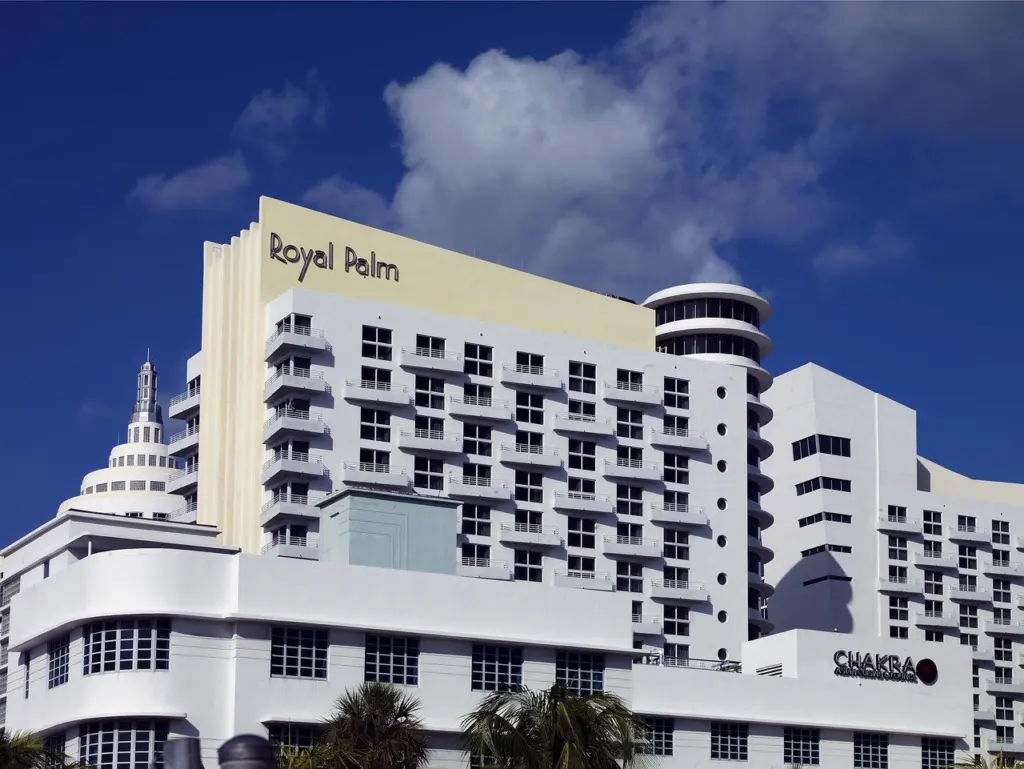
Miami Beach is the strongest choice if you want to compare many deco buildings quickly. Dezeen notes that the city claims the highest concentration of art deco buildings anywhere in the world. The city credits architects such as Albert Anis, L. Murray Dixon and Henry Hohauser with many of its deco buildings.
Hotels and a theatre worth a stop
The City of Miami Beach lists these examples, with their architects and addresses, on its art deco page:
- The Colony Hotel (1935): designed by Henry Hohauser, at 736 Ocean Drive.
- The Franklin (1934): designed by Victor H. Nellenbogen, at 860 Collins Avenue.
- The Ritz Plaza Hotel (1940): designed by L. Murray Dixon, at 1701 Collins Avenue and now the SLS.
- The Lincoln Theatre (1935): designed by Thomas W. Lamb and Robert E. Collins, at 551 Lincoln Road and now an H&M store.
Choose the hotels if you want the style at street level. The Lincoln Theatre is the better example of reuse: a theatre became a shop, so read the facade rather than expecting the original interior.
Starting point and festival
Begin at the Art Deco Museum & Welcome Center, which the Miami Design Preservation League describes as housed in the historic 10th Street Auditorium (1954). The same source says Hohauser arrived in 1932 and designed more than 300 structures over three decades, so his work is hard to miss. For timing, Miami Beach says Art Deco Weekend is a free cultural festival organised by the Miami Design Preservation League since 1977. Confirm the dates with the organiser before you book travel.
New York: towers and Village apartments
New York gives you the most famous deco silhouette and, a few streets away, quieter apartment-scale buildings. Pair one tower with one neighbourhood walk rather than trying to cover everything.
Chrysler Building and Empire State Building
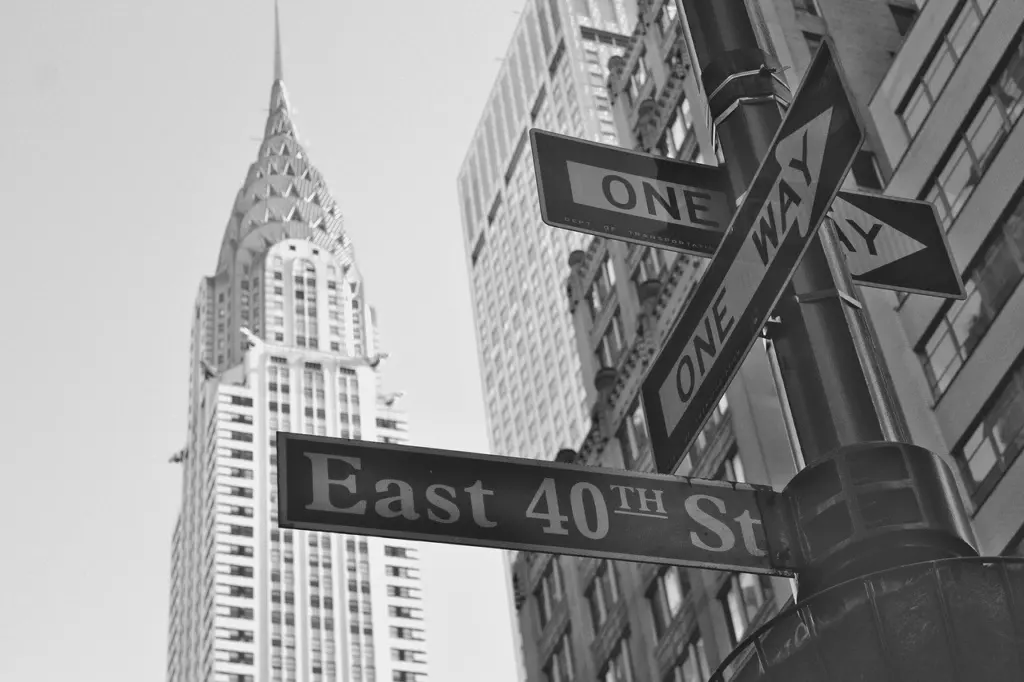
The Chrysler Building was designed by William Van Alen and opened on May 27, 1930. It is 1,046 feet tall, which Dezeen gives as 319 metres. Village Preservation notes it held the tallest-building title for just 11 months before the Empire State Building surpassed it. That makes the two towers a natural pair, one for ornament and one for the height race.
Look up for the stainless-steel crown. The large metal gargoyles are chrome-plated and modelled on 1929 Chrysler hood ornaments, which ties a skyscraper to the machine age in a way you can see from the street. For the rankings that followed, the two linked guides above cover the city and the country.
45 Christopher Street
Village Preservation points to 45 Christopher Street as a handsome apartment building designed by the firm Boak & Paris in 1930–31. Its deco character comes from setbacks and vertical lines rather than a gleaming crown. It suits visitors who want to see how the style worked on an ordinary residential street.
Beyond the United States: the Hoover Building
The Hoover Building in Perivale, west London, is described by Dezeen as the UK’s eminent art deco building. It was designed by Wallis, Gilbert & Partners and opened in 1931 as a factory. It was renovated into apartments in 2018. Add it to a London itinerary when you want proof that deco served industry as well as glamour, and treat the exterior as the reliable view now that people live there.
How to recognise art deco
Art deco is recognisable by a handful of repeatable traits rather than by a single silhouette. Village Preservation describes the style as defined by molded masses and geometric forms, bold colors, sharp kinetic lines and edges, with bas-relief and industrial elements. Use these checks on the buildings above:
- Geometry and symmetry: the City of Miami Beach says deco buildings often feature bold geometric shapes, clean lines and symmetrical designs. Stand back and see whether the facade is balanced and crisp.
- Repeated motifs: common ones include zigzags, chevrons, fluted patterns and stylised floral, nautical and sunburst designs. A hotel front with a sunburst over the door is a strong signal.
- Modern materials: stainless steel, aluminum, glass, concrete and plastic appear alongside stone and wood. Metal trim and glass are cues that a building belongs to this period.
- Industrial references: the Chrysler gargoyles borrow from car hood ornaments. If the ornament looks like it came from a machine, you are probably looking at deco.
These traits explain why a Miami hotel and a Manhattan tower can look so different yet belong together. The same visual vocabulary scales from a low pastel facade to a stepped, spired skyscraper.
Planning a visit
Make the trip work by matching the building type to the kind of access you can expect.
- Anchor the day: pair one cluster or tower with a walking route from a local preservation group, such as the Miami Design Preservation League or Village Preservation.
- Expect exteriors first: former theatres, hotels and factories now have other uses, so confirm interior access with the operator before you plan around a lobby.
- Time it with the festival: Art Deco Weekend in Miami Beach adds events to the architecture, but check dates in advance.
Frequently asked questions
Where does the name art deco come from?
It comes from the Art Deco International Exposition of Modern Decorative and Industrial Arts, held in Paris, which opened on April 28, 1925, according to the City of Miami Beach.
What is Streamline Moderne?
It is a later substyle marked by smooth, curved lines and minimalist forms. Miami Beach adopted it, according to the City of Miami Beach.
Is Art Deco Weekend free?
Yes. The city describes it as a free cultural festival celebrating architecture, history and the arts, organised by the Miami Design Preservation League since 1977.
Did art deco use neon?
Yes. The City of Miami Beach says neon lighting was often used for dramatic effect, especially on commercial or public buildings.