| Decision | What the evidence shows | Planning use |
|---|---|---|
| Lisbon neighbourhood safety | 19 of 24 freguesias rated Safe, 5 Moderate, 0 Caution and 0 Avoid at Night | A reasonable first solo city; check the rating for the area you book before you pay. |
| Lisbon pickpocket hotspots | Santa Maria Maior is rated Moderate, and Tram 28 is described as a pickpocket magnet | Keep valuables secured in these places and do not treat the famous tram as essential transport. |
| Amsterdam language barrier | Locals in shops and cafes spoke amazing English; the lowest language barrier of the European cities the writer visited | The easiest start for a traveler who speaks only English. |
| Vancouver public transport | Described as fantastic | Plan to rely on transit rather than a car, and choose lodging for convenience. |
| Vancouver hostels | Samesun Backpackers is recommended for solo travelers | A starting point for a hostel shortlist if you want company. |
The Lisbon ratings come from the Just Gutsy Lisbon solo safety map, while the Amsterdam and Vancouver observations come from Hayley on Holiday’s solo destination guide.
The best cities for solo travel for English speakers are Lisbon, Amsterdam and Vancouver, with Singapore as a fourth pick. Each keeps language, transit and meeting people manageable, though Lisbon needs extra pickpocket awareness.
Once you have chosen a destination, read how to plan a weekend in a new city for a framework to pace your first days after arrival.
Choosing a city by your biggest worry
The right pick depends on which source of friction you most want to remove. The travel writer behind Hayley on Holiday lists a language barrier that is not too much of a struggle among the criteria for a good solo city, and that criterion drives the choices below. Match your main concern to the city that handles it best.
- Language is your main worry: choose Amsterdam. Everyday exchanges in shops and cafes are the part of a solo trip you cannot avoid, and this is where the evidence is strongest.
- You want company and atmosphere: choose Lisbon, and book accommodation in or near its sociable central neighbourhoods. Accept that you will need to guard your belongings in the busiest tourist spots.
- You want to move around without a car: choose Vancouver, where public transport is described as fantastic and a recommended hostel gives you a place to meet others.
- You want English as an official language: choose Singapore, where a solo traveler found socialising noticeably easier for that reason.
None of these choices rules out the others. They tell you where to spend your attention before you book.
Lisbon: a sociable base with a few pickpocket hotspots
Lisbon rewards solo travelers who choose where they sleep with care. A travel writer at Backpacking Bella describes Bairro Alto as a sociable and central part of the city. She adds that solo travel there is easier when you stay in accommodation where you can meet other people. Treat that as a lodging rule: a hostel or guesthouse with shared spaces will do more for your social life than a private flat on a quiet street.
The same neighbourhood logic applies to safety. Just Gutsy’s Lisbon guide calls Tram 28 a pickpocket magnet. The tram is famous and photogenic, so many first-time visitors queue for it, but a solo traveler carrying a phone, wallet and passport has the most to lose in a crowded carriage. If you want the ride, travel light and keep your belongings secured. If you only want the view, walk the same streets instead.

Lisbon suits travelers who like a lively base and are willing to take a few simple precautions. It suits less well anyone who wants a city with no pickpocketing concerns at all, since the most visited areas are the ones flagged.
Amsterdam: the lowest language barrier
Amsterdam is the strongest choice if you speak only English. The Hayley on Holiday writer reports that every local who served her, in a shop or a cafe, spoke amazing English, and calls Amsterdam the best city she visited in Europe for its minimal language barrier. That is one traveler’s experience rather than a measured index, so read it as a good sign rather than a guarantee for every corner of the city.
The practical effect is that small solo tasks stay simple. Ordering a meal, asking a question at a counter or checking an address does not require a phrasebook, and that keeps the fatigue of a first solo trip low. It also makes casual conversation with staff and fellow customers easier, which matters when you are travelling without a companion to talk to.
Amsterdam suits first-time solo travelers and anyone who wants a gentle introduction to travelling alone in Europe. If your goal is to immerse yourself in another language, you may find it too easy.
Vancouver: public transport and hostel options
Vancouver’s strongest solo asset is its public transport, which the Hayley on Holiday writer describes as fantastic. Good transit changes how you plan: you can choose lodging for atmosphere or price rather than for walking distance to everything, and you can move between neighbourhoods without a car or a taxi budget.
The same writer recommends Samesun Backpackers for solo travelers who want a hostel. If you are travelling alone and want built-in company, a hostel is a sensible default, and one with a recommendation from a solo traveler is a better starting point than an unsorted search list. Read the current reviews before booking, because a recommendation tells you what suited one visitor rather than what suits you.
Vancouver suits travelers who want a city with easy movement and English as the everyday language. It asks less of you in planning than a city where the transit system is hard to read.
Singapore: English as an official language
Singapore completes the list because English is an official language there. A solo traveler writing at Where’s Jessie B says this made it a lot easier to be social. That is a useful reminder that, for English speakers, the practical benefit of an English-friendly city is not only getting directions. It also lowers the effort of starting conversations with strangers, which is often the hardest part of travelling alone.
Choose Singapore if the main thing that holds you back from solo travel is talking to people. Compared with the European options above, it is a longer way to travel for most readers, so weigh the journey against the benefit.
Safety ratings and what they mean
Safety evidence is most detailed for Lisbon. Just Gutsy’s map rates no freguesia at Caution or Avoid at Night, and its five Moderate ratings are the places to look at before choosing a bed. Santa Maria Maior is the Moderate area the guide singles out, calling it beautiful but Lisbon’s worst area for pickpockets. The implication is that Lisbon’s concern is theft rather than personal danger. You can still stay in Santa Maria Maior if its sights draw you, but carry only what you need there.
It helps to remember what the rating is. It is a travel site’s neighbourhood map, not a government index, so use it to compare areas inside Lisbon rather than to rank Lisbon against other cities. For Amsterdam, Vancouver and Singapore, check your own government’s current travel advisory before booking, and apply the same ordinary habits you would use in any large city: keep valuables secured and plan how you will get back to your lodging.
Getting around
Lisbon: hills and trams
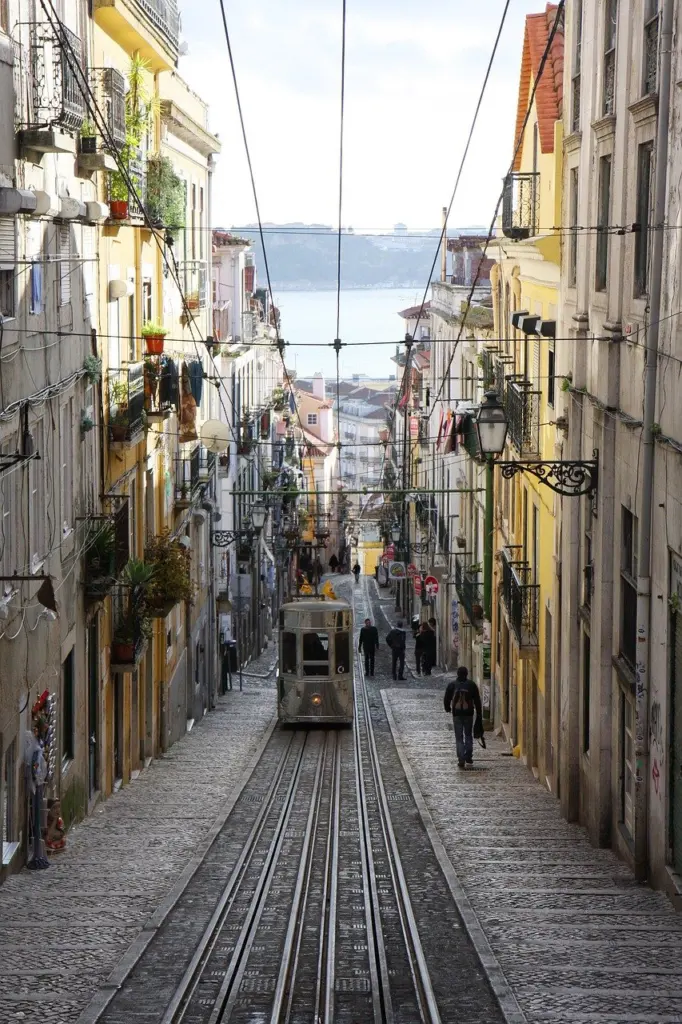
In Lisbon the shape of the streets decides how you travel. Tram tracks climb steep, cobbled streets between the buildings, as the photo shows, and a tram can save a hard climb. Because the busiest tourist tram is also the one flagged for pickpockets, consider other lines or your own feet for everyday trips.
Vancouver: transit first
In Vancouver, treat public transport as your default. Described as fantastic by a solo traveler who visited, it removes the need to hire a car for city travel. Pair it with a lodging choice near a stop you will use often, and you will save time on every outing.
Walking when you want control
Walking gives a solo traveler the most freedom, because you never wait for anyone and you can stop whenever you like. A route you build yourself, as described in Self-Guided Walking Tours: Plan, Navigate, and Enjoy Unforgettable City Strolls In 2026, suits this style of travel well, especially in your first hours in a new city.
Meeting people while travelling alone
Solo does not have to mean alone. The advice at Where’s Jessie B is blunt: stay in hostels, couchsurf and join a tour, and you will meet people along the way. The common thread is shared space and shared activity. A hostel dorm or common room gives you people to talk to without having to approach anyone cold, and a tour gives a group a reason to talk.
Language matters here as well. In Amsterdam, easy English with locals makes quick chats practical, and in Singapore, official English helped one traveler be social. In Lisbon, the choice of accommodation does most of the work, as the Backpacking Bella writer notes.
For a quieter way to spend time between social plans, museums let you set your own pace. If your trip takes you to the United States, The 7 Best Art Museums In NYC To Visit In 2026 — Where To Go First is a starting point for a solo day.
Frequently asked questions
What time does nightlife start in Bairro Alto?
According to Just Gutsy’s Lisbon guide, Bairro Alto nightlife starts after 11pm. Plan an earlier meal and a later night out if you want to see it at its liveliest.
Can I take day trips from Vancouver without a car?
Yes. The Hayley on Holiday writer notes there are plenty of accessible day trip options, such as taking the bus to Whistler.
How should I budget for public transit?
Fares and quality vary by city, so check the operator’s official fare page before you arrive. The Hayley on Holiday writer describes London’s transit as expensive but extremely efficient, which shows that cost and quality are separate questions.
Does English being official help in Singapore?
For one solo traveler, yes: she found it a lot easier to be social there because English is an official language, according to Where’s Jessie B.